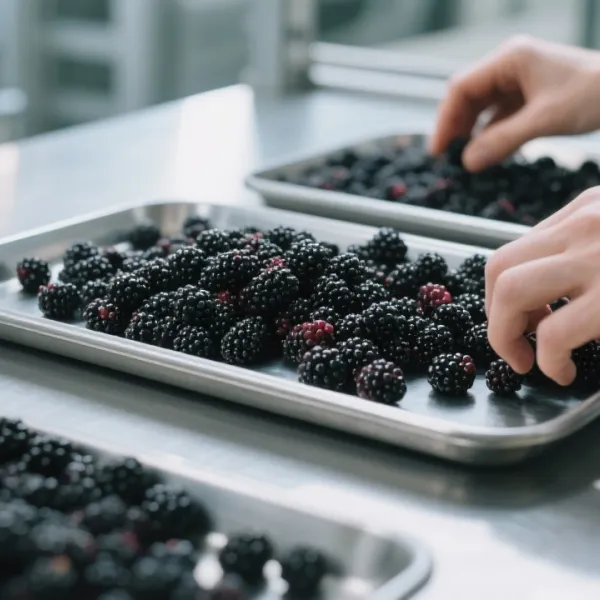
How IQF Freezing Preserves Over 90% Anthocyanins in Frozen Blackberries at -18°C
Why do some frozen blackberries lose color and antioxidant potency so quickly? The answer often lies in the freezing curve. This article explains how IQF (Individually Quick Frozen) technology rapidly brings blackberries below -18°C, minimizing ice-crystal damage and slowing oxidation—effectively pressing “pause” on freshness to retain over 90% of anthocyanins and protect key nutrients such as vitamin C. It contrasts IQF with slow freezing, linking crystal size to cell rupture, drip loss, pigment degradation, and flavor decline. From harvest timing and triple manual sorting to controlled cold-chain transport, it outlines the end-to-end quality logic behind truly nutrient-locked frozen fruit. Practical application scenarios—including beverage manufacturing that relies on stable color and consistent polyphenol performance—highlight what decision-makers should verify when sourcing. Are you paying for low-grade frozen fruit without realizing it? Learn more about scientific frozen blackberry application solutions.
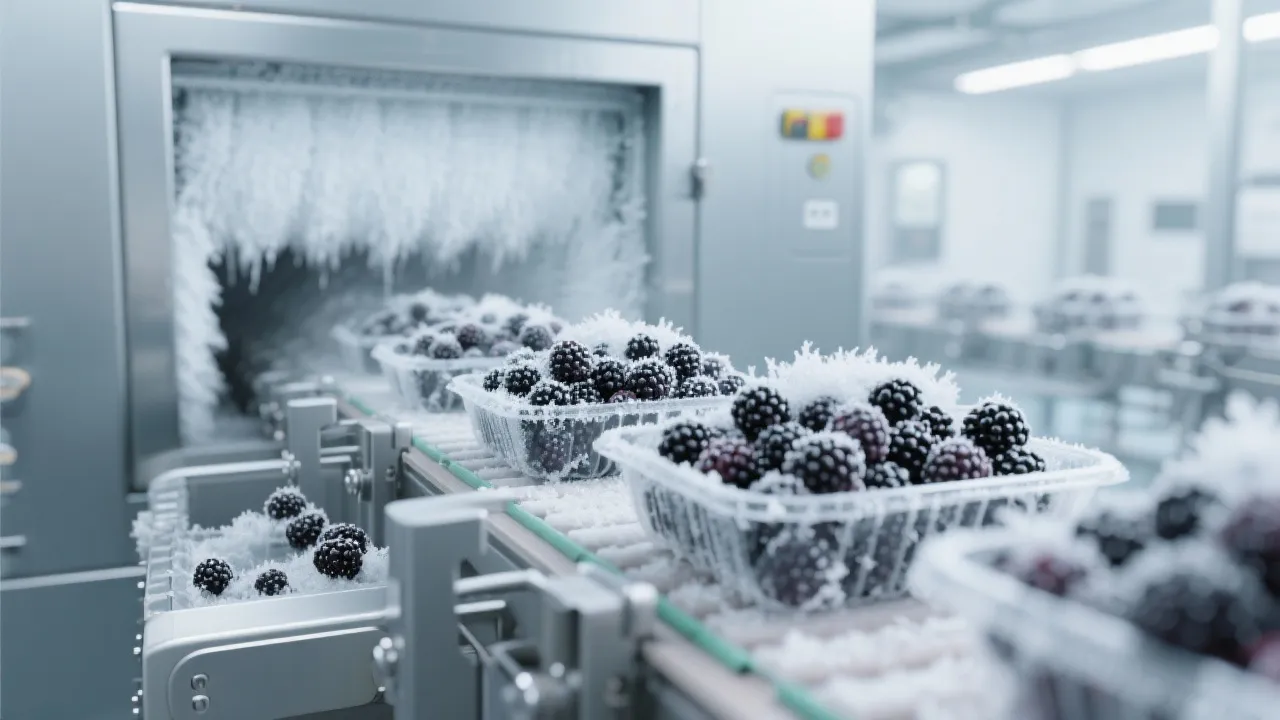
How Can Frozen Blackberries Keep 90%+ Anthocyanins? The Real Power of Rapid Freezing Below -18°C
Frozen blackberries are often sold as “nutrient locked,” yet the market reality is uneven. When freezing is slow, ice crystals grow large, cell walls rupture, and oxidation accelerates—leading to dull color, watery thaw, and measurable loss of anthocyanins and vitamin C. Rapid freezing acts like pressing a pause button on the fruit’s biochemistry, preserving structure, pigment, and flavor compounds for demanding B2B applications.
Decision-stage buyers in beverages, dairy, bakery, and nutraceuticals increasingly ask a hard question: “Is this blackberry actually high in anthocyanins when it reaches my factory?” The answer depends less on “frozen vs fresh” and more on how fast the fruit passes through the critical freezing zone where most cellular damage occurs.
And here’s the uncomfortable prompt many procurement teams avoid until a quality complaint happens: Are you paying for low-grade frozen fruit without realizing it? If your thawed blackberry bleeds excessively, looks brownish-purple, or produces inconsistent Brix and color in production, the root cause is often the freezing curve and cold-chain discipline—not the berry variety alone.
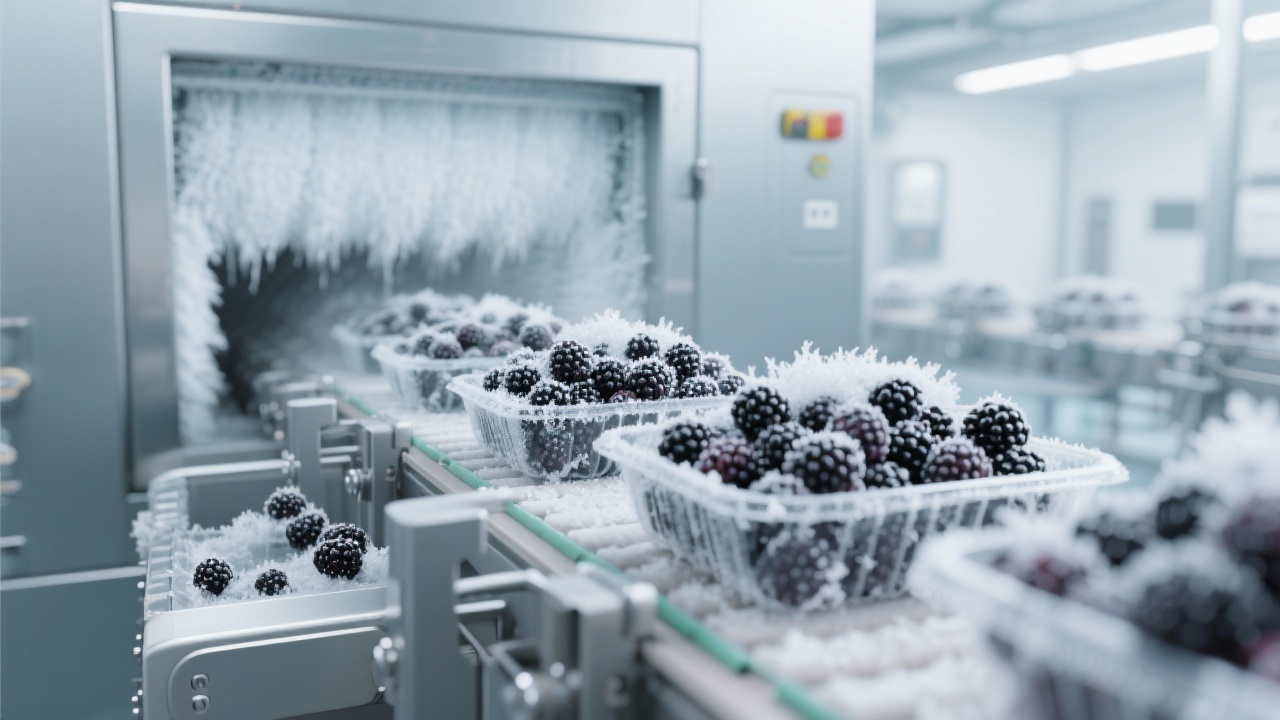
Rapid Freezing vs. Slow Freezing: What Changes Inside the Berry
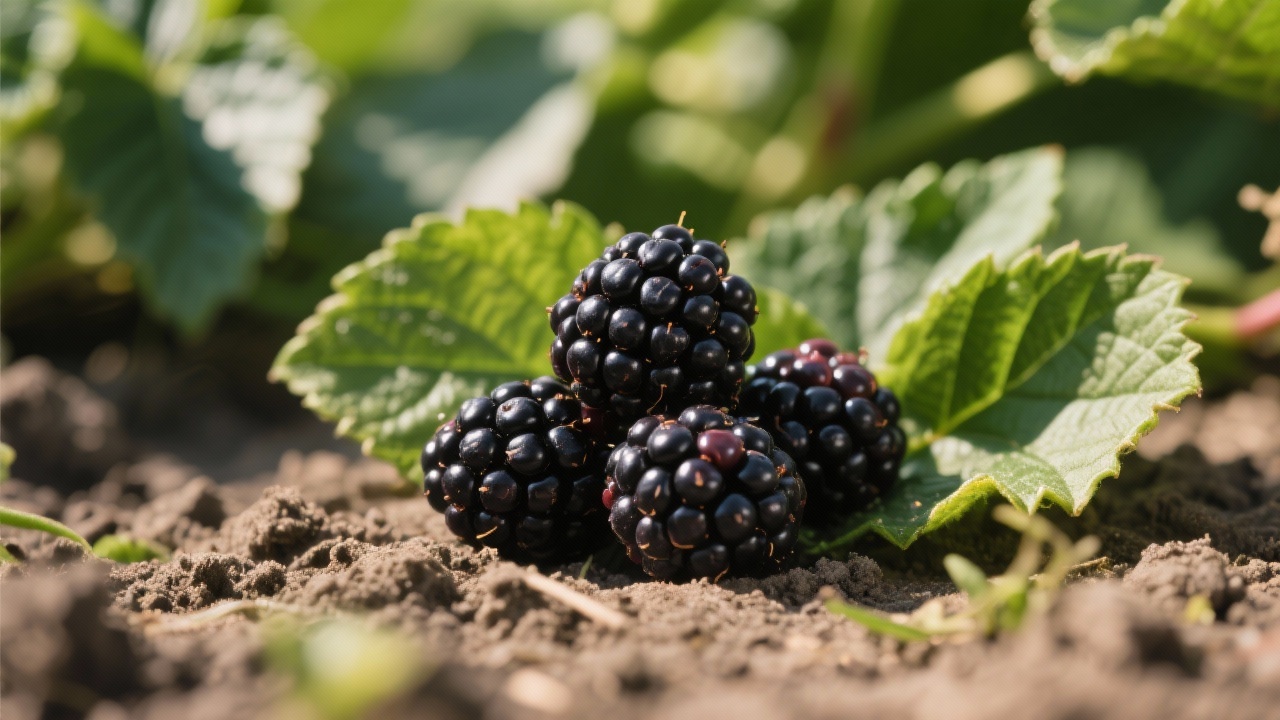
A blackberry is a delicate cluster of drupelets with thin skins and high water content. During freezing, water forms ice crystals. The size and location of these crystals determine whether the berry keeps its natural structure or collapses into a soft, leaky mass after thawing.
Mechanism in plain language
Slow freezing allows water to migrate and crystals to grow large, puncturing membranes and releasing enzymes and oxygen into contact with anthocyanins—speeding pigment breakdown and browning reactions.
Rapid freezing forms many tiny crystals quickly. Cell walls remain more intact, drip loss is reduced, and less oxygen-driven degradation occurs. In practice, rapid freezing is a structural protection strategy that also becomes a nutritional protection strategy.
The most important moment is the passage through the “maximum ice crystal formation zone” (commonly around -1°C to -5°C for high-moisture fruits). Rapid freezing aims to pass this zone quickly and bring the core temperature down to -18°C or colder for stable storage.
Nutrient Retention Benchmarks: Anthocyanins and Vitamin C
Anthocyanins are the signature compounds behind blackberry’s dark purple color and much of its functional positioning. They are also sensitive to oxygen, light, pH shifts, and enzymatic activity. Freezing does not “create” anthocyanins; it either protects what exists at harvest or allows it to degrade.
Reference retention ranges seen in industry practice
Metric (typical storage at -18°C)
Rapid Freezing
Slow Freezing
Total anthocyanins retention after 3–6 months
90–95% (when process + cold chain are controlled)
70–85% (more oxidation + drip loss)
Vitamin C retention after 3–6 months
80–90%
60–80%
Drip loss after thawing (quality indicator)
Low to moderate (better integrity)
Moderate to high (more leakage)
Note: Retention depends on cultivar, harvest maturity, oxygen exposure, package barrier, freezer stability, and thawing practices. The ranges above are widely used as procurement-level reference targets for high-quality IQF berries.
The practical takeaway for product developers is simple: if you need stable color and polyphenol positioning, you don’t just specify “frozen blackberries.” You specify rapid freezing performance and validated cold-chain consistency.
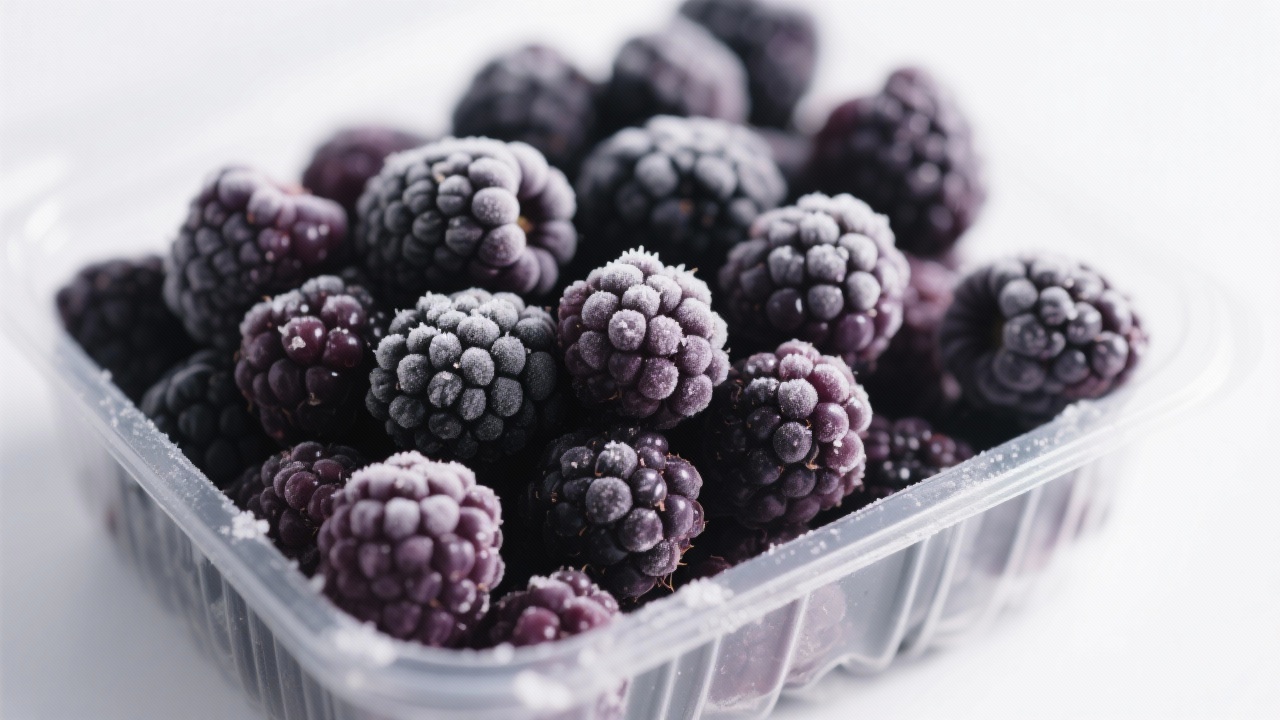
The Less-Discussed Enemy: Oxidation After Cell Damage
Many buyers focus on “how cold” the freezer is, but temperature alone is not enough. When slow freezing ruptures cells, the berry’s internal components—enzymes, acids, oxygen—mix more freely. This increases the chance of anthocyanin degradation and color drift over storage time.
“For dark berries, freezing speed matters as much as storage temperature. Smaller ice crystals reduce tissue disruption, which helps maintain pigment stability and reduces drip-related losses.”
— Common guidance aligned with food processing best practices for IQF fruit handling and quality preservation
That “watery purple” thaw liquid is not only a sensory issue. It can translate to inconsistent color dosing in smoothies, yogurt inclusions, and concentrates—forcing rework, extra stabilizers, or higher usage rates to hit the same shade and taste.
A High-Quality Frozen Blackberry Is a System, Not a Single Step
Rapid freezing is the headline, but it performs best when upstream and downstream steps don’t sabotage it. In commercial supply, premium frozen blackberry programs typically follow a disciplined path:
Suggested infographic (for your page designer)
- Harvest at optimal maturity (balanced Brix/acid, maximum pigment development)
- Fast pre-cooling to slow enzymatic activity before freezing
- Triple manual + optical sorting (remove under-ripe, soft, stems, foreign matter)
- IQF rapid freezing (minimize time in -1°C to -5°C zone; stabilize core ≤ -18°C)
- High-barrier packaging to reduce oxygen exposure and freezer burn
- Verified cold chain (warehouse → container → destination storage temperature records)
The “three rounds of sorting” step is not marketing decoration. It’s a risk-control measure. Fewer defects mean fewer crushed berries, less exposed surface area, and more consistent anthocyanin performance batch to batch—exactly what industrial buyers need.
Application Reality Check: Beverage Brands Don’t Buy “Berries,” They Buy Consistency
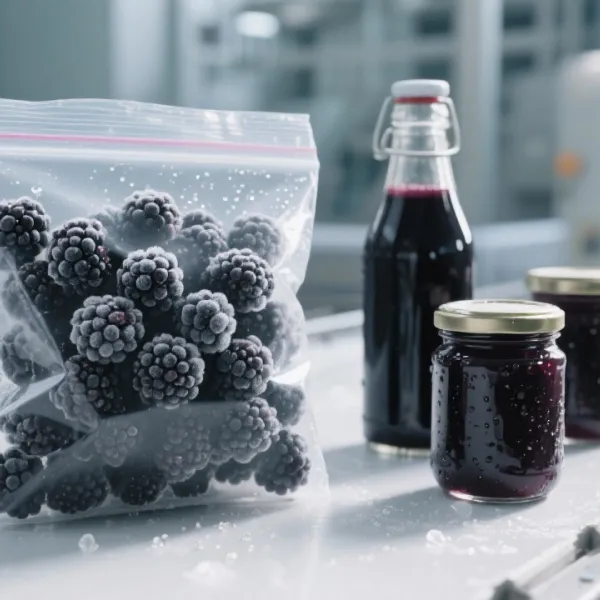
In beverage manufacturing, frozen blackberries are rarely used “as-is.” They are blended, heated mildly, acid-adjusted, filtered, or mixed with dairy alternatives—each step challenges pigment stability. If the incoming fruit already has compromised cell integrity, the process window narrows.
A common scenario in ready-to-blend smoothie bases
A mid-sized smoothie brand tests two frozen blackberry lots with similar specs on paper. In pilot blending, Lot A delivers deeper natural color at the same fruit dosage and shows lower separation after 24 hours. Lot B requires higher usage to reach the same shade and gives a more “oxidized” note.
When traced, the differentiator is not the fruit name, but the process discipline: rapid freezing + stable cold chain + better sorting reduces drip loss and protects anthocyanins, which translates into lower cost-in-use and fewer formulation adjustments.
For procurement, this is the key: nutrient retention is not only a nutrition claim issue. It directly affects sensory quality, processing yield, and batch reproducibility.
How to Identify “Nutrient-Locked” Frozen Blackberries (What to Ask Suppliers)
If a supplier claims “90%+ anthocyanin retention,” decision-stage buyers can request proof-friendly details that correlate strongly with real performance:
- Freezing method: IQF tunnel/fluidized bed details and freezing time targets through the critical zone
- Core temperature verification: evidence that product reaches ≤ -18°C quickly and stays stable
- Sorting protocol: manual + optical, defect tolerance, foreign matter controls
- Analytics: anthocyanins (e.g., cyanidin-3-glucoside equivalents), vitamin C, and drip loss test results
- Cold chain documentation: temperature records for storage and shipping
- Packaging: oxygen and moisture barrier level to reduce freezer burn and oxidation
These questions do not complicate sourcing—they simplify it. They filter out suppliers who rely on generic claims and highlight those who operate a measurable quality system.
Stop Guessing What’s Inside Your Frozen Fruit
If you’re evaluating suppliers or reformulating due to unstable color, drip loss, or “flat” berry notes, it may be time to validate the freezing curve and the cold-chain logic behind the product—before you keep paying for quality that isn’t there.
Learn more scientific frozen blackberry application solutions



_(2).jpg?x-oss-process=image/resize,m_fill,h_600,w_600/format,webp)



.jpg?x-oss-process=image/resize,m_fill,h_600,w_600/format,webp)