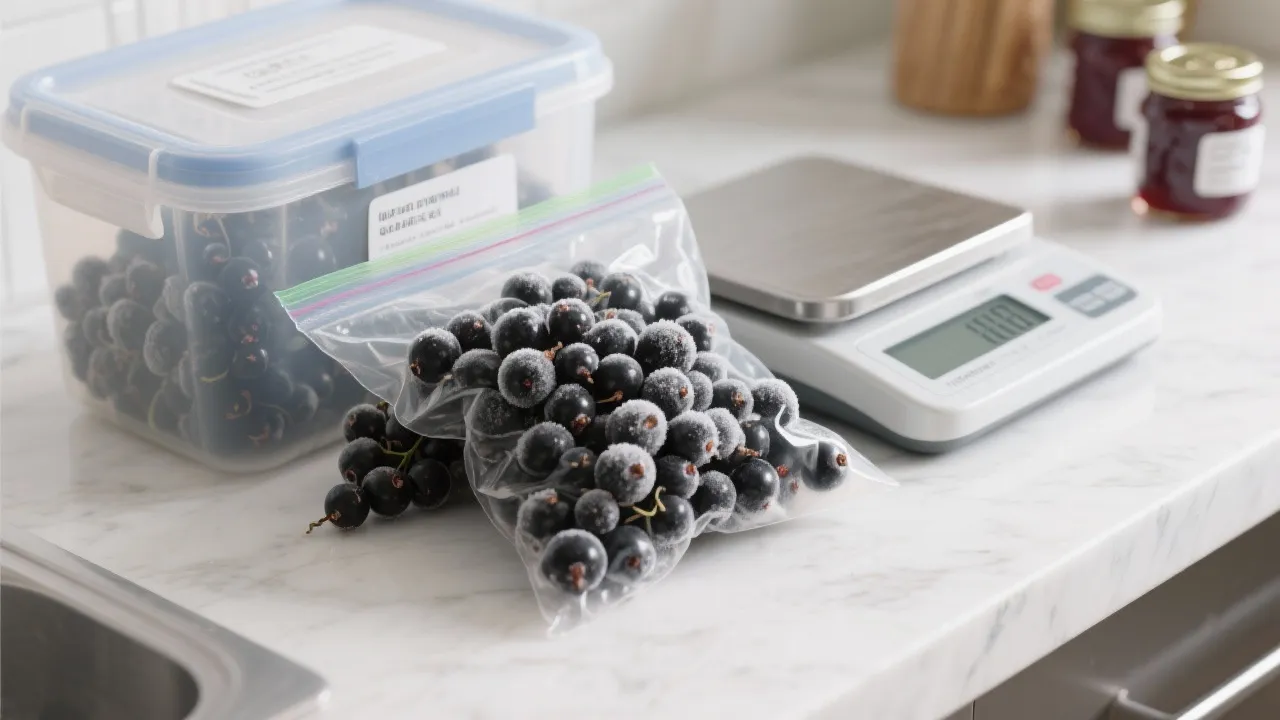
You’ve probably seen fresh black currants in summer markets—but what if we told you that frozen black currants could actually give your fruit preserves a more consistent flavor, deeper color, and higher nutrient retention?
Let’s break down why smart producers worldwide are switching from fresh to frozen berries—and how you can too.
When black currants are flash-frozen within hours of harvest, they retain up to 92% of their Vitamin C—compared to only 65–70% in fresh berries stored for just 4 days at room temperature (source: Journal of Food Science, 2021). The same goes for anthocyanins—the powerful pigments responsible for that rich purple hue. Freezing doesn’t destroy them—it locks them in.
That means when you make jam or preserve using frozen black currants, you’re not just saving time—you’re preserving quality. No more dull, watery batches. Just vibrant, deeply colored spreads with intense berry flavor.
Here’s how to get it right every time:
Pro tip: For best results, use a digital thermometer. Target 104°C (219°F) for gel point—this ensures consistency across batches.
A family-run jam brand in Bavaria switched to frozen black currants from our certified supplier. Within three months, their customer satisfaction score rose from 4.2 to 4.8 stars on Amazon Europe—and their batch-to-batch variation dropped from 18% to under 5%. Why? Because the frozen fruit gave them control over both yield and quality.
They now produce over 10,000 jars/month with zero waste. Their secret? Consistent raw material + precise process control.
Ready to elevate your fruit preserve game?
Download Our Free Technical Whitepaper on Frozen Fruit ProcessingWe know making high-quality fruit preserves isn’t just about ingredients—it’s about understanding the science behind them. That’s why we built this guide: to help you turn frozen black currants into something truly special.
Got your own recipe? We’d love to hear it—drop a comment below and share your tips!


_(2).jpg?x-oss-process=image/resize,m_fill,h_600,w_600/format,webp)


_(4).jpg?x-oss-process=image/resize,m_fill,h_600,w_600/format,webp)