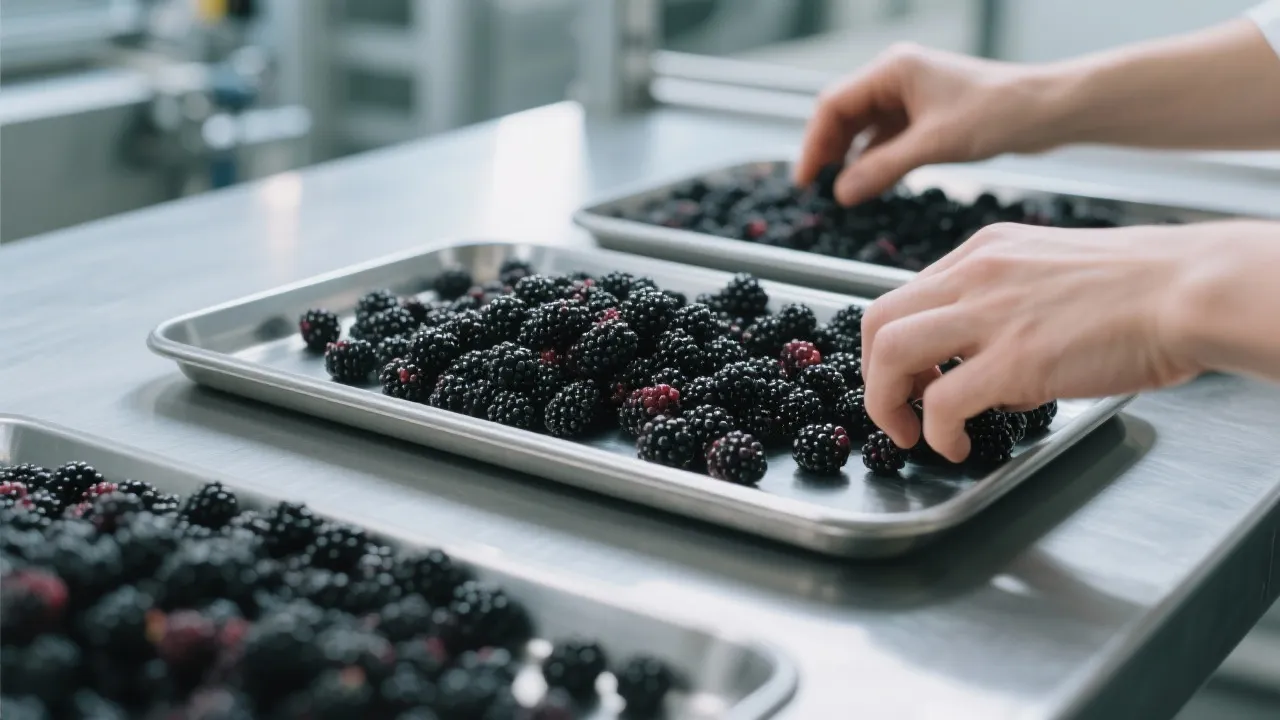
If you’re developing high-end desserts, you already know the uncomfortable truth: fresh blackberries are amazing—until they aren’t. A single week of weather shifts can change Brix, acidity, aroma, and firmness. For a pastry chef, product manager, or R&D team, that means rebalancing recipes, reprinting specs, and fighting “why does it taste different?” feedback.
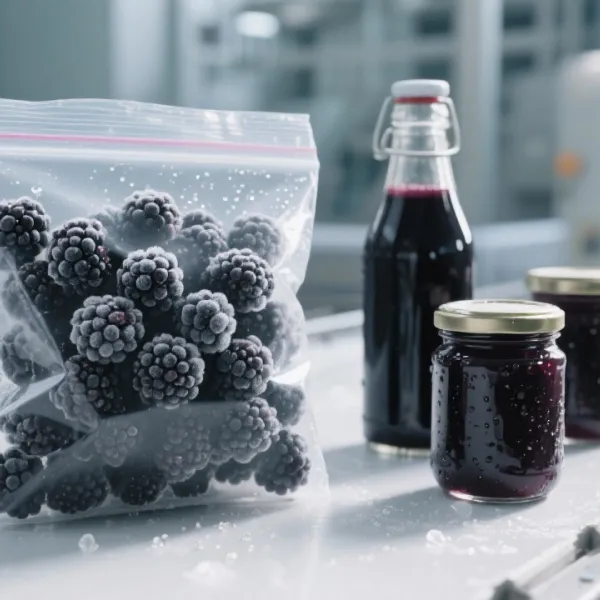
High-quality IQF frozen blackberries (Individually Quick Frozen) have quietly become the stability tool in premium dessert pipelines: reliable supply, controllable quality, and repeatable sensory profiles—without forcing you to compromise on color or blackberry identity.
In decision-stage sourcing, the question isn’t “fresh vs. frozen” as a belief—it’s variance vs. control. In many markets, fresh blackberries can swing from 7–11 °Brix across weeks, with acidity changes of 15–30% depending on harvest timing and transport. That volatility hits mousse, gel, sorbet, and glaze the hardest.
Real-world R&D scenario: A boutique patisserie running a blackberry-vanilla entremet reported that switching from mixed-origin fresh fruit to a single-spec IQF blackberry lot reduced weekly recipe adjustments from 3 times/month to <1 time/month, mainly by stabilizing acidity and color bleed during thawing and baking.
With a professional frozen supplier, you’re not buying “cold fruit.” You’re buying a set of measurable controls: sorting, ripeness windows, rapid freezing, and cold-chain discipline.
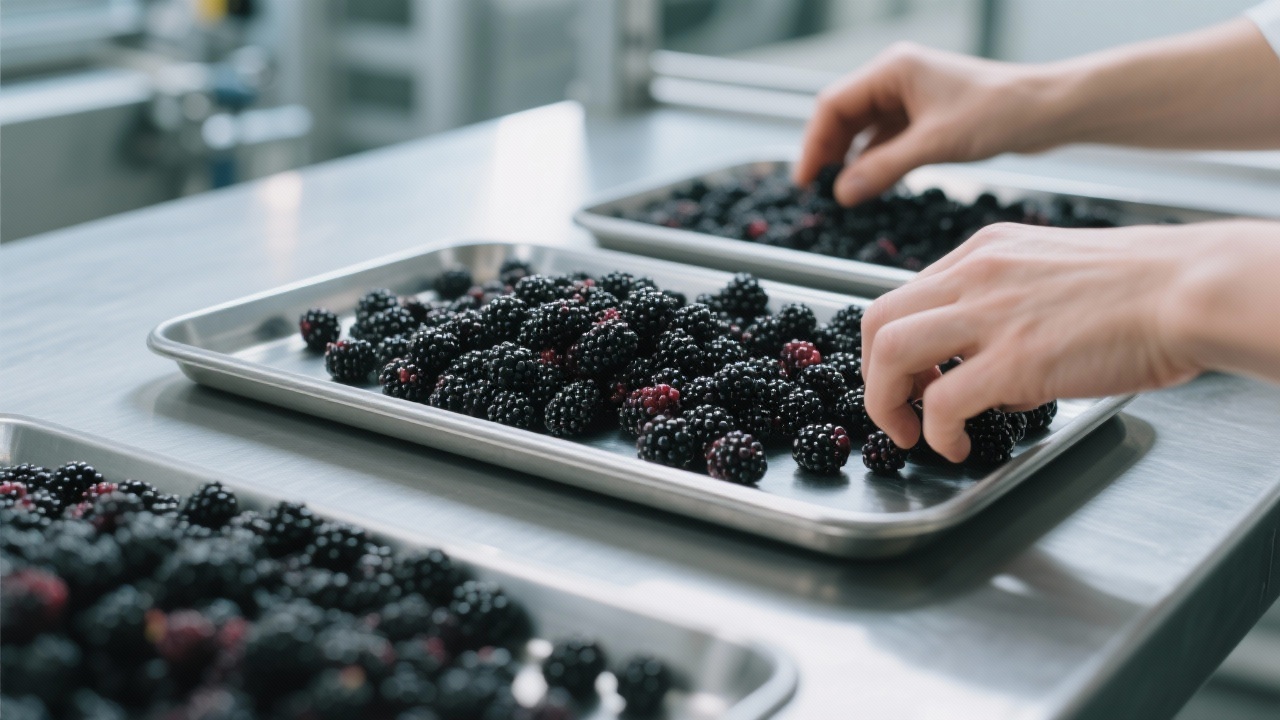
When your goal is year-round replication—same bite, same aroma, same plating—the most practical evaluation framework is three metrics: whole-berry rate, color stability, and flavor restoration. Each can be checked with a simple logic that works for both chefs and QA teams.
Whole berries are not just prettier—they behave better. Broken fruit releases juice early, raising purge, muddying creams, and causing “gray-purple” streaking in mousse or buttercream. For premium dessert work, aim for ≥95% whole-berry rate with low clump rate (berries should separate easily).
Blackberry color can be a hero—or a contaminant—depending on where it bleeds. The practical aim is deep, even black-purple with controlled juice release. In high-fat systems (cream, mascarpone), unstable pigments can shift to dull tones; in low pH gels, color can look vibrant but over-bleed.
A reliable supplier usually manages color stability through ripeness sorting (avoiding underripe red drupelets) and a tight quick-freeze curve that minimizes cell rupture.
“Flavor restoration” is your sensory checkpoint: does it taste like blackberry, not generic berry sweetness? Strong frozen specs are often built around a consistent sensory band such as 9–11 °Brix and pH 3.0–3.4 (ranges vary by cultivar), plus a clean aroma profile without fermented notes.
The outdated assumption is that frozen equals inferior. In reality, premium frozen is often harvested at peak ripeness and frozen fast enough to reduce large ice crystal formation. That’s the difference between berries that thaw into defined shape versus berries that collapse into purple water.
1) Harvest & pre-cool → reduce respiration, slow enzyme activity
2) Sorting & manual inspection → remove soft, underripe, damaged fruit
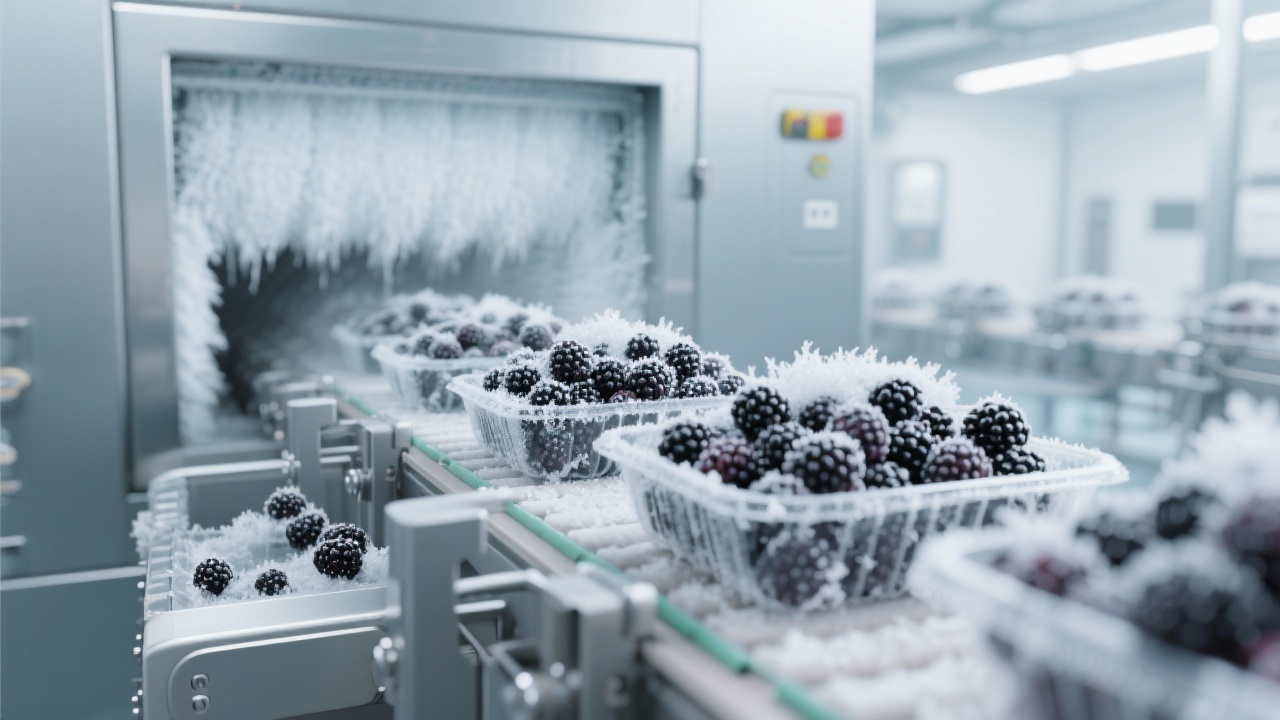
3) Quick freeze (IQF) → lock structure, reduce clumping
4) Metal detection & packing → food safety + batch traceability
5) Cold chain storage → stable temperature, less frost, less purge
Your results depend less on “frozen vs. fresh” and more on how you thaw and where you place the berry in the system. Below are field-tested tactics that keep your blackberry desserts stable from test kitchen to scaled production.
In frozen desserts, blackberry is sensitive to oxidation and acid balance. For clean flavor, many teams run a two-layer approach: a strained blackberry base for smoothness plus a controlled berry ripple for identity.
For layered cakes and plated desserts, the win is repeatable viscosity. Start by standardizing berry solids: weigh fruit, weigh purge, then target the same final soluble solids every batch. Premium IQF helps because the fruit condition is consistent enough to make these targets achievable.
In mousse and creams, uncontrolled bleed looks like a defect. To keep clean lines, treat berries as either a decor element (minimal moisture exchange) or a contained insert (gelled or pre-cooked).
If you need to justify frozen blackberry sourcing internally (procurement, QA, finance), visual benchmarks help. The table below reflects typical observations in premium dessert production when comparing common market grades.
| Grade Snapshot | Whole Berry Rate | Purge After 8–12h Thaw | Color Bleed Risk | Best-fit Dessert Use |
|---|---|---|---|---|
| Premium IQF (manual selection) | 95–98% | 5–12% | Low–Medium | Plating, inclusions, high-visual entremets |
| Standard IQF (mixed sorting) | 85–94% | 10–18% | Medium | Compote, puree, ripple, baked fillings |
| Industrial (high breakage) | 70–84% | 15–25% | High | Sauces, heavily processed bases |
Decision hint: if the berry is visible to the guest (top garnish, cut surface, glass display), prioritize whole-berry rate. If it becomes a processed base (sauce/puree), prioritize flavor restoration and micro specs.
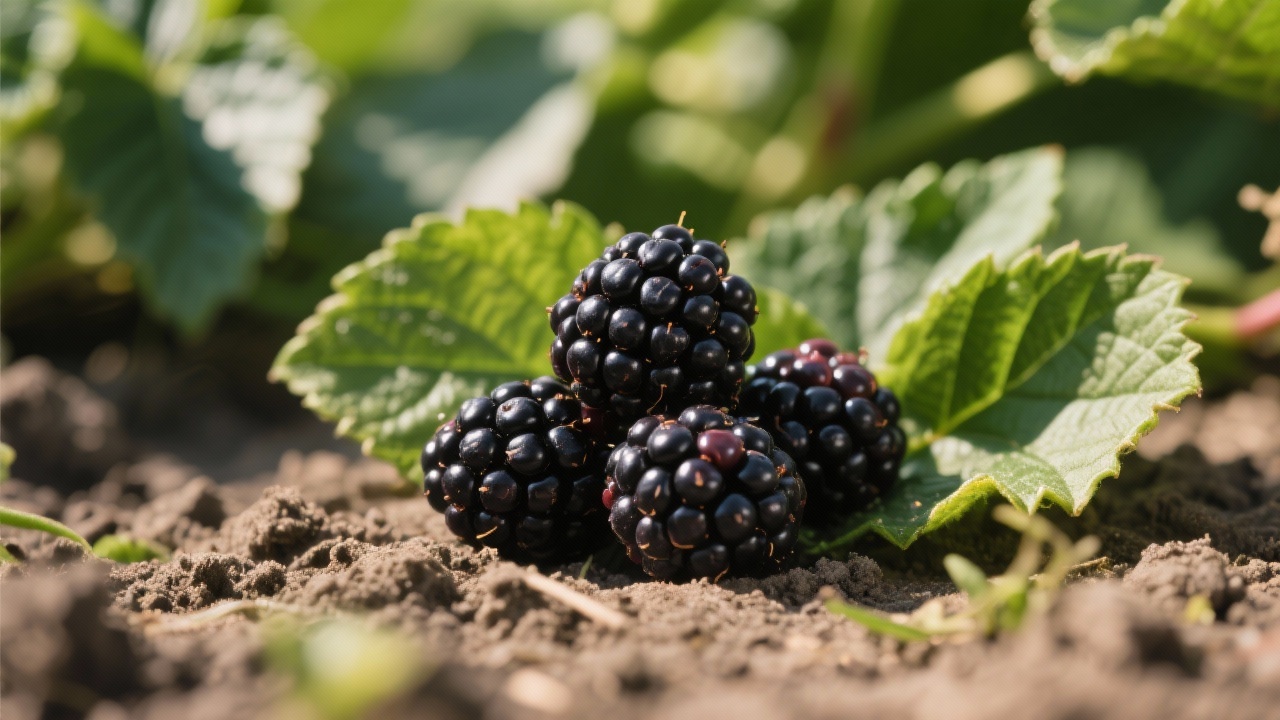
If you’re sourcing for a premium line, don’t stop at “IQF blackberries.” Ask for the details that predict your outcomes in mousse, gel, or bakery.
“When blackberries are used as a visible layer, consistency isn’t a luxury—it’s the only way to protect the brand. A stable frozen spec lets us scale without losing the signature bite.”
— Executive Pastry Chef (interview excerpt), premium dessert production
If you’re deciding on frozen blackberries for premium dessert R&D, get the checklist and evaluation method your team can use immediately—covering whole-berry rate, thaw loss, color stability, and application-specific tips for ice cream, jam, and cake.
Get the “Frozen Berry Ingredient Selection White Paper (PDF)” for Frozen BlackberriesPrefer practical discussion? Join our dessert R&D exchange group to compare thawing protocols and formulation tweaks across different dessert systems.


_(2).jpg?x-oss-process=image/resize,m_fill,h_600,w_600/format,webp)



.jpg?x-oss-process=image/resize,m_fill,h_600,w_600/format,webp)


.jpg?x-oss-process=image/resize,m_fill,h_600,w_600/format,webp)