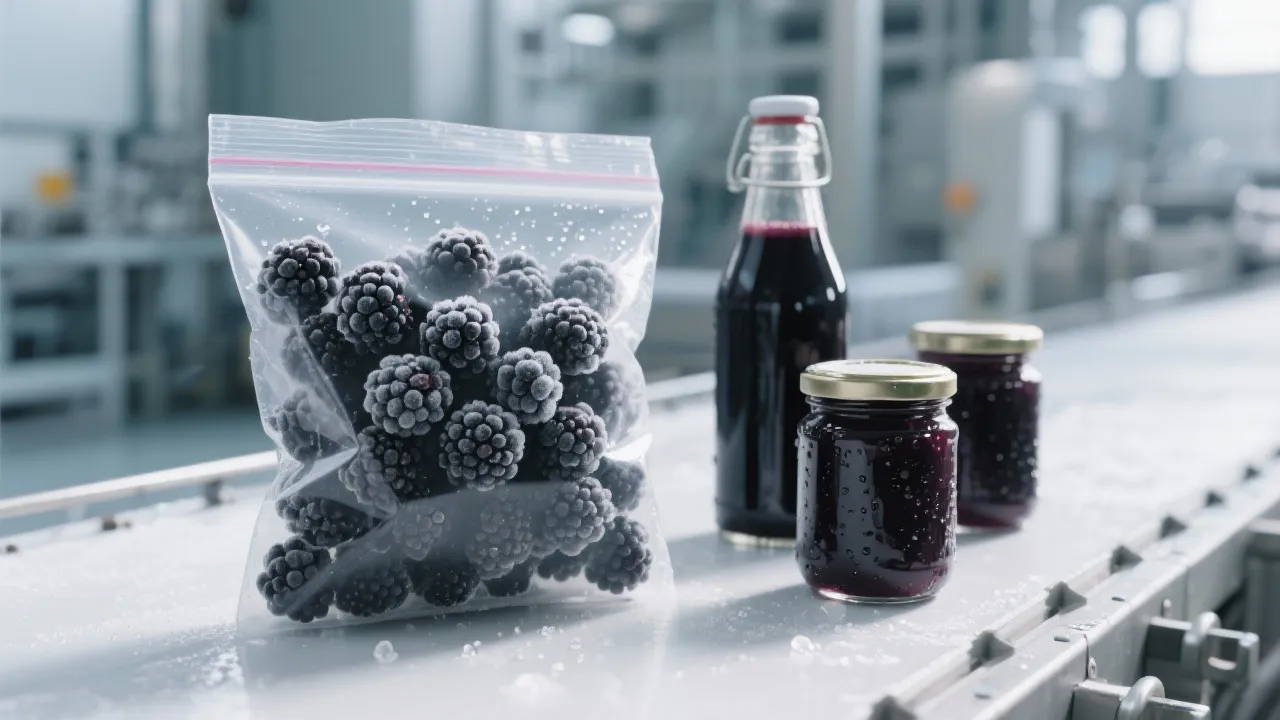
For food processors and exporters dealing with delicate berries like blackberries, maintaining product integrity during freezing is not just a quality concern—it directly impacts your bottom line. When whole frozen blackberries arrive at international markets with compromised structure and diminished flavor, the consequences extend beyond customer dissatisfaction to tangible financial losses.
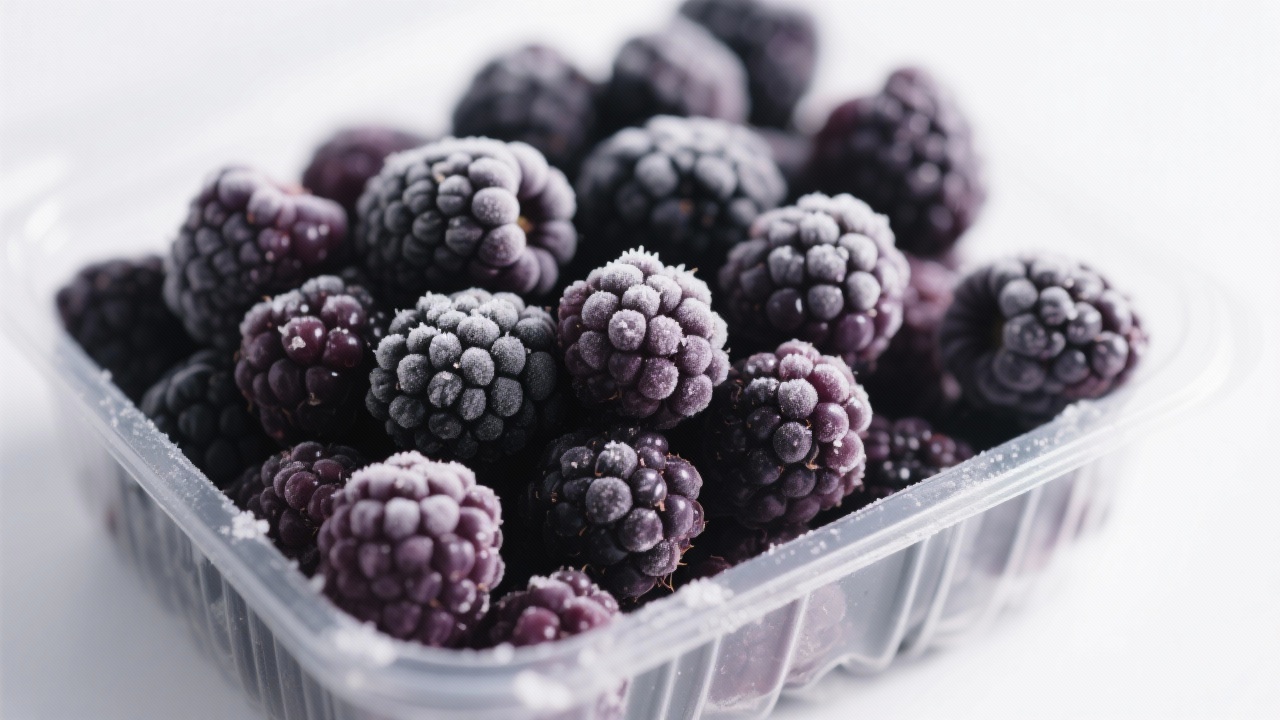
Traditional freezing methods subject blackberries to slow temperature reduction, allowing large ice crystals to form within the fruit's cellular structure. These crystals act like microscopic blades, piercing cell walls and rupturing the delicate membranes that hold the fruit together. The result is a product that loses up to 40% of its whole fruit integrity during processing and thawing, according to research published in the Journal of Food Science and Technology.
Industry Insight:
Blackberry processors report that conventional freezing typically results in whole fruit yields of only 55-65%, with significant losses occurring during sorting, packaging, and transportation to export markets.
At the core of the problem lies the physics of freezing. When blackberries freeze slowly, water molecules have time to migrate and form large, irregular ice crystals (50-100μm in size) that disrupt cellular structures. This process not only breaks down the fruit's physical integrity but also accelerates nutrient loss and flavor degradation.
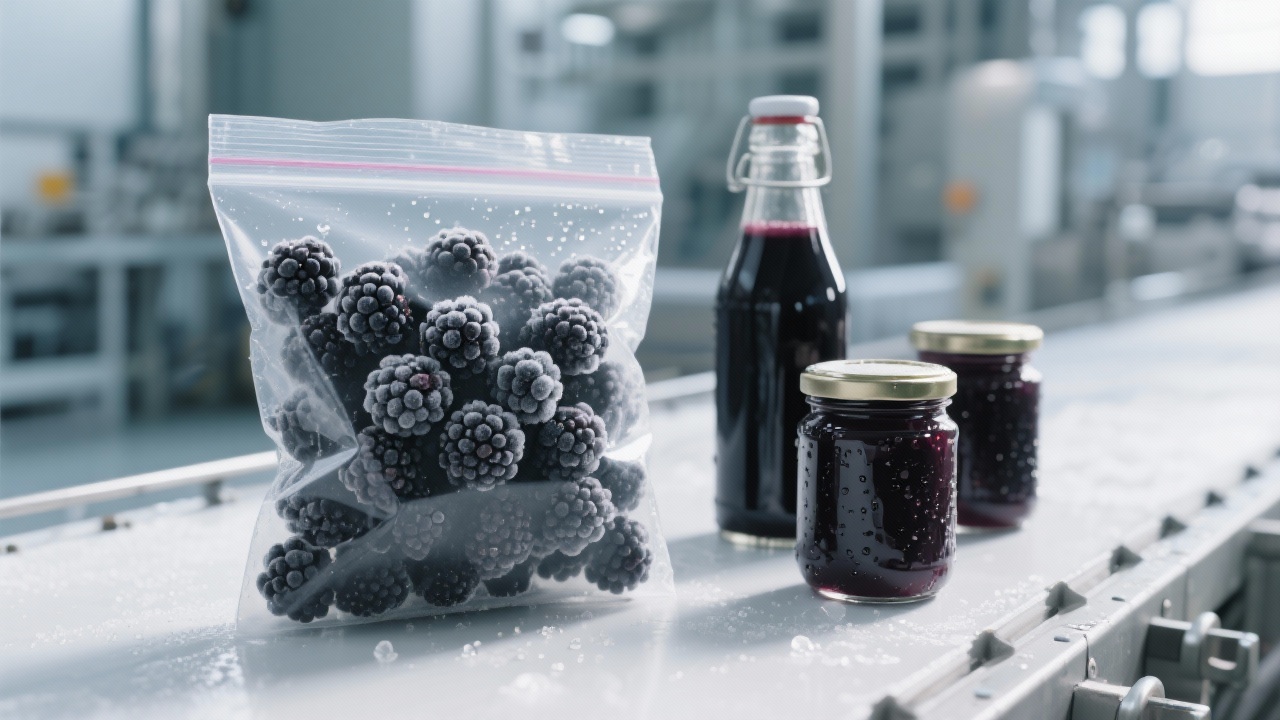
Quick freezing technology, particularly Individual Quick Freezing (IQF), revolutionizes blackberry preservation by rapidly reducing temperatures to -30°C or lower within minutes. This ultra-fast cooling process limits ice crystal formation to sizes smaller than 10μm—too small to cause significant cellular damage.
| Quality Parameter | Conventional Freezing | Quick Freezing | Improvement |
|---|---|---|---|
| Whole Fruit Yield | 55-65% | 85-92% | +30% |
| Vitamin C Retention | 58-65% | 82-88% | +25% |
| Anthocyanin Preservation | 62-68% | 85-90% | +23% |
| Texture Integrity | Poor-Fair | Good-Excellent | Significant |
For food processors, the benefits of quick freezing technology translate directly to the balance sheet. Consider a facility processing 100 tons of blackberries weekly—improving whole fruit yield from 60% to 90% results in 30 additional tons of salable product each week. At average market prices, this represents potential annual revenue increases of $1.2-1.8 million.
While the benefits of quick freezing are clear, achieving optimal results requires attention to several key factors:
Maintaining consistent temperatures throughout the freezing process is essential. Fluctuations as small as ±2°C can significantly impact ice crystal formation. Modern quick freezing systems from suppliers like 亿商桥 offer advanced temperature management that ensures uniform cooling across the entire product batch.
Technical Note:
The optimal freezing rate for blackberries is between 1-2 cm per hour, which requires specialized equipment capable of maintaining air velocities of 5-8 m/s at temperatures of -35°C to -40°C during the initial freezing phase.
Proper handling before freezing significantly impacts final quality. This includes gentle washing, careful sorting to remove damaged fruit, and appropriate blanching when necessary. Research shows that pre-cooling blackberries to 4°C before freezing can improve whole fruit yield by an additional 5-7%.
When evaluating quick freezing equipment, processors should consider capacity requirements, energy efficiency, and ease of integration with existing production lines. Fluidized bed systems are particularly effective for small fruits like blackberries, providing excellent air circulation and individual freezing that prevents clumping.
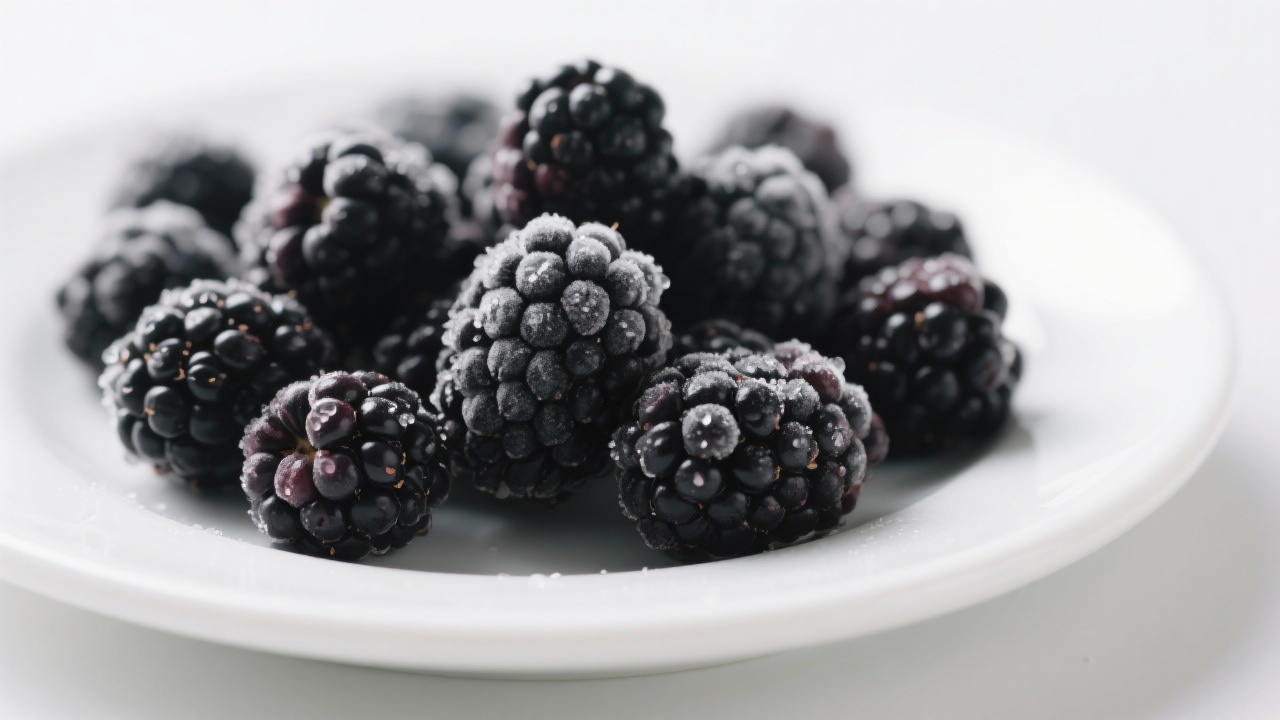
Food exporters utilizing quick freezing technology report significant competitive advantages in international markets. European buyers, in particular, show strong preference for IQF blackberries with high whole fruit percentages, often willing to pay 15-20% premium prices for superior quality.
Reduced shipping losses also contribute to improved profitability. One major blackberry exporter documented a 78% reduction in customer complaints after implementing quick freezing technology, along with a 22% decrease in product rejected upon arrival at destination ports.
The bottom line: Less冰晶破坏 = Higher整果率 = Reduced损耗成本
For food processors and exporters, quick freezing technology represents not just a quality improvement, but a strategic business investment with measurable returns.
What challenges have you faced with maintaining blackberry quality during freezing and export? Have you implemented quick freezing technology, and if so, what results have you seen in your whole fruit yields and customer satisfaction?
Discover how 亿商桥's quick freezing solutions can help you achieve 85%+ whole fruit rates and access premium export markets
Get Your Free Process Evaluation


_(2).jpg?x-oss-process=image/resize,m_fill,h_600,w_600/format,webp)


.jpg?x-oss-process=image/resize,m_fill,h_600,w_600/format,webp)


_(4).jpg?x-oss-process=image/resize,m_fill,h_600,w_600/format,webp)
.jpg?x-oss-process=image/resize,m_fill,h_600,w_600/format,webp)